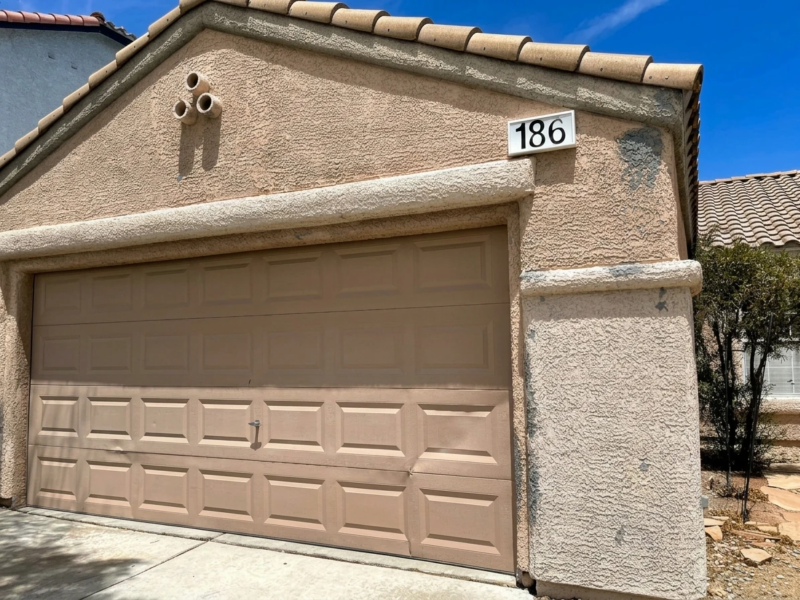
Noticing peeling or flaking paint on your home’s exterior? Whether it’s happening on your stucco walls, trim, or around windows, peeling paint is more than a cosmetic problem.
In Las Vegas, extreme heat, intense sunlight, moisture, and improper surface preparation can all contribute to paint failure.
Fortunately, peeling exterior paint can often be repaired. The key is identifying what’s causing the problem before applying another coat.
Here’s what Las Vegas homeowners should know about why exterior paint peels and how to fix it.
One of the most common reasons exterior paint peels is inadequate preparation.
Painting over dust, dirt, chalky residue, or loose paint prevents the new coating from bonding properly.
This is especially important for Las Vegas stucco homes, where desert dust can accumulate in the textured surface.
The fix: Thoroughly clean the exterior, remove failing paint, repair damaged areas, and use the appropriate primer before repainting.
Las Vegas summers create challenging conditions for exterior painting.
Direct sunlight can heat stucco walls well above the surrounding air temperature. If paint is applied to an excessively hot surface, it may dry too quickly, affecting adhesion and the finished appearance.
Over time, UV exposure can also contribute to fading, chalking, and coating deterioration.
The fix: Use quality exterior coatings designed for the surface and apply them within the manufacturer’s recommended temperature range.
Although Las Vegas has a dry climate, moisture can still cause exterior paint problems.
Water from irrigation systems, roof leaks, damaged caulking, or rain can enter cracks and openings. If moisture becomes trapped behind the coating, paint may bubble, blister, or peel.
The fix: Identify and resolve the moisture source before repainting. Covering the affected area with another coat won’t solve the underlying problem.
Not every paint product is suitable for stucco, masonry, wood, or metal.
Using incompatible coatings, skipping necessary primer, or painting over a failing existing finish can result in poor adhesion.
Fresh cement-based stucco also requires special attention to curing and alkalinity.
The fix: Choose compatible primers and exterior coatings based on the surface material, existing paint, and manufacturer recommendations.c
Even professionally applied paint eventually begins to deteriorate.
Years of sunlight, temperature changes, and weather exposure can weaken a coating.
Fading and chalking may appear before more serious problems develop, although these signs don’t always mean peeling is imminent.
If your exterior shows multiple signs of deterioration, read our guide to 6 signs it’s time to repaint your Las Vegas stucco home.
Proper repairs depend on the cause and extent of the damage.
Inspect the affected area for cracks, water staining, loose stucco, and other signs of underlying damage.
If moisture or structural problems are present, address them before painting.
Carefully remove peeling or flaking material using methods appropriate for the surface. Sound existing paint may be left in place if adhesion is adequate.
Safety note: Homes built before 1978 may contain lead-based paint. Disturbing old coatings can release hazardous dust, so use appropriate lead-safe procedures and qualified contractors when required.
Clean away dust and debris, allow the surface to dry, and repair cracks or damaged stucco.
Apply a compatible primer where the coating system requires one.
Use an exterior paint suitable for stucco and follow the manufacturer’s instructions for coverage, drying time, and application conditions.
Avoid painting when the wall temperature falls outside the product’s recommended range.
Small, isolated areas of peeling may only require localized repairs if the surrounding paint remains sound.
However, widespread peeling, recurring bubbles, or deteriorating coatings across several walls may indicate that a more extensive repaint is necessary.
A professional painter can evaluate whether spot repairs will provide a lasting result or whether repainting larger sections makes more sense.
No. Loose or peeling paint must be removed, and the underlying cause should be corrected before applying a new coating.
Premature peeling can result from inadequate surface preparation, moisture, incompatible coatings, or unsuitable application conditions. A professional inspection can help identify the cause.
No. Chalking is a powdery residue that forms as a coating degrades. Peeling occurs when the paint loses adhesion and separates from the underlying surface.
Peeling paint doesn’t always mean your entire home needs repainting, but ignoring the problem can allow surface damage to worsen.
At M&M Painting, we help homeowners throughout Las Vegas, Summerlin, and Henderson with exterior painting projects, including evaluating surfaces before repainting.
Whether you’re dealing with peeling stucco paint, faded walls, or an aging exterior finish, we’re here to discuss your options.